
Finding Muhlenberg Township Resident Records
Muhlenberg Township has no single public household roll. A useful Muhlenberg Township residents directory search starts by matching the question to its custodian. An address belongs with Berks Assessment and the Recorder. A public court question belongs with the Pennsylvania Judiciary portal and the proper Berks clerk. Estate or marriage history belongs with the Register of Wills. The local Township can hold administrative files, while library and archive collections preserve historic context. Those sources overlap, but they do not establish the same facts.
Property information can identify an assessment owner and a parcel. A deed can identify recorded parties and a title link. A directory or census can place a published household at a particular time. None of those sources reliably lists every person at an address. Keep the original labels, dates, and municipality field in your notes, then look for a second independent official or archival source before drawing a conclusion.
- Search the Berks property portal by owner, street address, or UPI when the question begins with a parcel.
- Record the site location, municipality, sale reference, and UPI exactly as the property card shows them.
- Use the sale reference or named party in the Recorder index to reach the recorded-document trail.
- For a historical household, compare the nearest confirmed regional directory volume with deeds, census material, or estate records.
- When an online index stops, ask the custodian or research library about a specific older book, microfilm series, or existing file.
Muhlenberg Township Resident Record Custodians
The principal records offices serve all of Berks County, not just the Township. Assessment keeps the live parcel roll. The Recorder keeps instruments and plans. Election Services administers controlled voter-list products, and the Register of Wills maintains estate, marriage, and genealogy routes. The details of using an address across those records belong on the Muhlenberg Township street directory, while the cards below help identify the right counter or portal.
Berks County Recorder of Deeds
633 Court Street, third floor
Reading, PA 19601
610-478-3380
Berks County Assessment
400 E. Wyomissing Avenue
Mohnton, PA 19540
610-478-6262
Berks Election Services
633 Court Street, first floor
Reading, PA 19601
610-478-6490
Muhlenberg Township Parcels by Field
The Berks Property Records Search is the practical starting point for an address question. It accepts an owner name, address pieces, or a parcel number called a UPI. The property card can show the site location, municipality, ownership and mailing block, assessment values, sales information, and a deed book/page or instrument reference. It is an assessment record, so the owner and mailing lines should be copied as labeled rather than converted into a claim about everyone who lives there.
| Search field | Use | Research note |
|---|---|---|
| Parcel Number | Locate the UPI | Fourteen to seventeen characters; partial input is accepted. |
| Owner Name | Find an assessment owner | Last name first, full or partial, without punctuation. |
| Address Number and Street | Find a site | A full or partial street can be used; Direction and ZIP are optional narrowers. |
| Sort | Review results | Parcel, owner, location, municipality description, and direction options are available. |
Note: A property-card result remains subject to county update timing and does not create a full resident roster.
Site and Mailing Fields in Muhlenberg Township
A recurring source of error in a Muhlenberg Township residents directory search is treating a mailing address as the parcel address. The Berks card separates Site Location from Mailing Address. The first identifies the real estate. The second is where assessment correspondence is sent, and it may belong to a post-office box, a fiduciary, another property, or a place outside the Township. The card's Resident/Non-Resident field also needs to be read as displayed, not expanded into a conclusion about a household.
- Situs
- The physical location of real estate, shown on a property card as the site location.
- UPI
- The Berks parcel identifier that links a mapped parcel to its assessment card and recorded-document leads.
- Instrument number
- A Recorder reference used on newer filings; older sale references can appear as book and page.
- Legal description
- The land description in a recorded document, often using a lot, plan, metes, bounds, or a prior reference.
The field distinction also matters around Reading and Temple postal labels. A ZIP or display city alone does not settle whether an address sits in Muhlenberg Township. The municipality line and UPI give the stronger county record anchor.
Berks Deed Trails for Muhlenberg Township
Once the property card supplies a sale reference, the next stop is the Berks Recorder Cloud Search. The Recorder reports computerized index and image coverage from the county's 1752 founding. Search the cited party, document reference, date, or document category, then read the recorded filing for its grantor, grantee, legal description, and linked prior reference. A recorded party is evidence of a transaction role, not automatic proof of current residency.
The Recorder preserves original handwritten or typed books through 1953, microfilm from 1953 through 2004, and digitally retained records from 2004 forward. For pre-1926 deed and mortgage names, its instructions specifically point researchers to Index Books, where similar sounding names can be grouped and a personal search uses last name plus first initial. Pre-1900 miscellaneous books can matter for rights of way and easements.
See the Recorder's official search guidance before choosing the historical route.
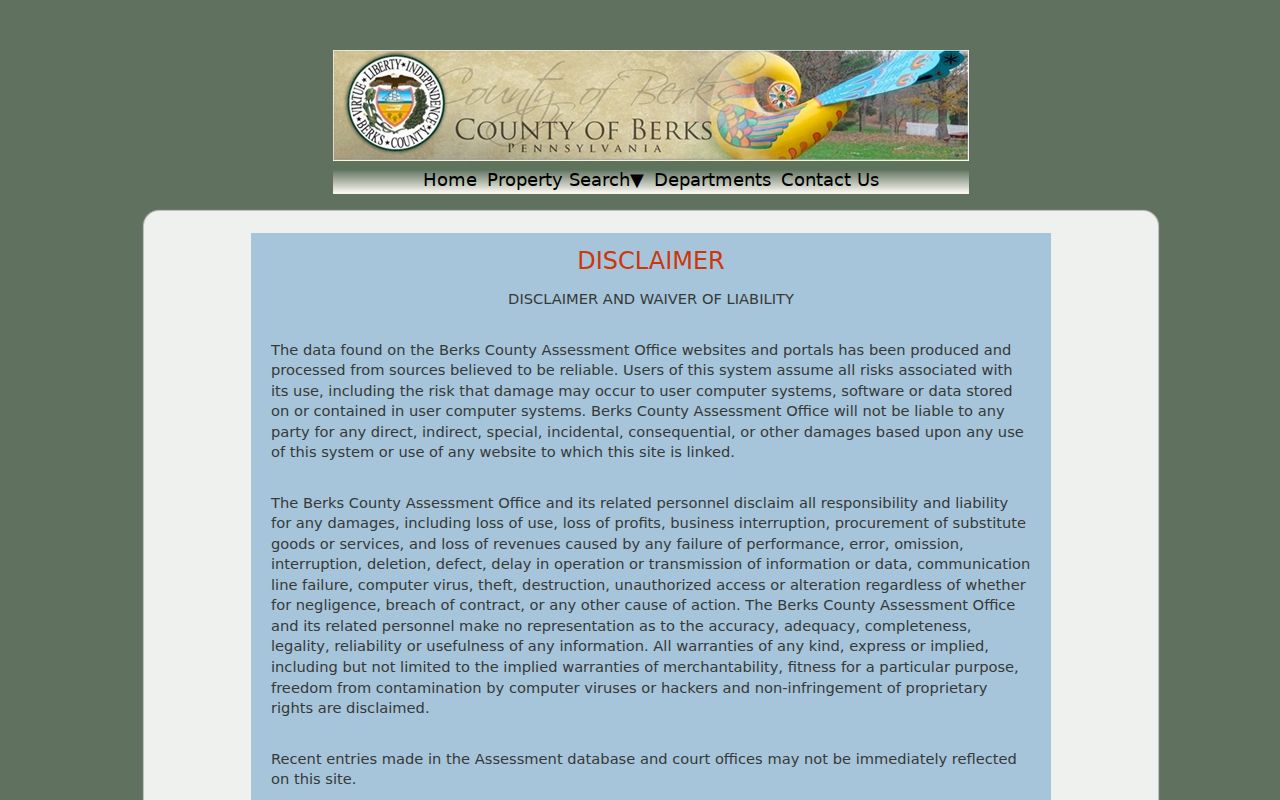
The search screen makes clear why an address, UPI, and municipality should travel together in a property-record note.
Muhlenberg Township Court Name Checks
The free Pennsylvania Judiciary Web Portal Case Search provides public docket sheets for the Berks Court of Common Pleas and relevant Magisterial District Courts. Its own help recommends using the minimum known criteria, such as participant first name, last name, and county, then narrowing. The form includes participant, county, date, docket, category, status, and other filters. A docket may show case identifiers, public events, participant roles, dates, and available status or disposition information.
A no-result search is not a clean bill of history. Juvenile, sealed, expunged, limited-access, and some civil Common Pleas matters may not display. Public electronic docket information can also disappear under retention rules. For a particular public record, use the division that holds it: Clerk of Courts for criminal Common Pleas material, Prothonotary for civil or family filings, or Court Administration and the Magisterial office for their records.
The official form's county, participant, and date filters are visible in the state case-search interface.
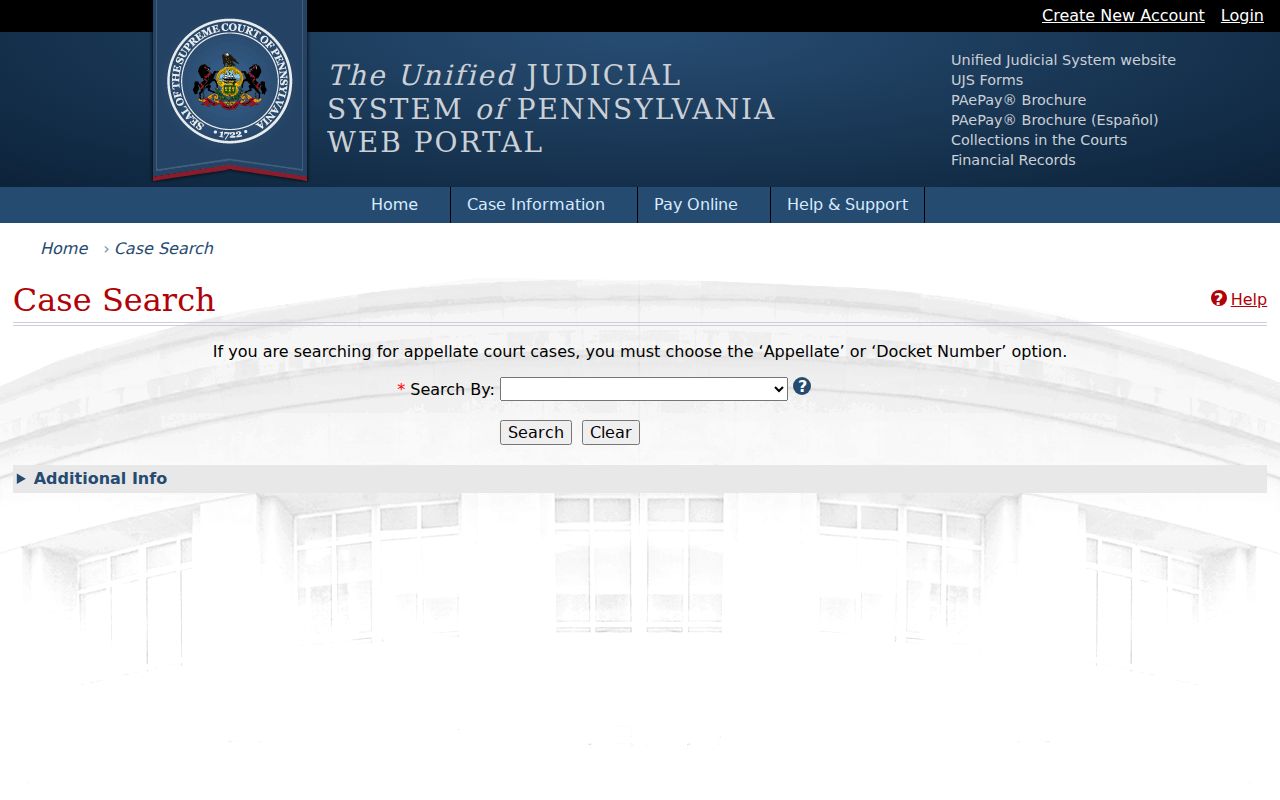
Use that public index to identify a docket and custodian, not as a substitute for every court file.
Current Muhlenberg Township Directory Sources
Current sources in a Muhlenberg Township residents directory do not have equal reach. The property portal concerns assessment ownership. The Recorder index concerns recorded parties. Election records have a personal-status service and separately controlled list products. Estate and marriage sources have their own public and confidential periods. The value comes from using the source that fits the fact, then keeping the access boundary intact.
| Source | Who It Lists | Keeper | Access |
|---|---|---|---|
| Assessment parcel card | Assessment owner and parcel facts | Berks Assessment | Public name, address, or UPI portal |
| Recorded-document index | Parties, document dates, and property links | Berks Recorder | Cloud Search, Index Books, counter |
| Estate and genealogy records | Estate, marriage, and historic life-event context | Register of Wills | Online route for 1992-present estate documents; older files by contact |
| Election list products | Defined voter-administration fields | Berks Election Services | Controlled request with affirmation and restrictions |
| Regional directory collections | Time-stamped historic listings | Library and archive institutions | Confirmed-volume or catalog research |
Official records and commercial compilations serve different roles. A compilation can provide a starting lead, but it can be stale or attached to the wrong person. The custodian record is where a name, address, parcel, docket, or filing must be checked.
| Official custodian record | Commercial compilation category |
|---|---|
| Shows the fields and access limits set by the office that created the record. | May combine records and other data with uncertain update timing or matching. |
| Offers a correction or redaction route through the responsible custodian. | Does not replace the custodian's correction process or protected-address rules. |
| Supports a narrow, source-dated research conclusion. | Should remain a lead until independently checked against an official or archival source. |
A name question usually needs more than one of these sources. The Muhlenberg Township resident lookup path explains how to corroborate a person without confusing an assessment or docket result for a complete identity record.
Controlled Voter Records in Muhlenberg Township
Pennsylvania's voter-registration status service is for an individual to check personal registration status. It is not an open people browser. Berks Election Services instead handles formal public-information requests for specialized voter products. The state identifies a Street List, Walking List, Public Information List, and full voter export, each with prescribed fields and conditions.
The Street List can include name, residence address, mailing address, party, and status. It is a controlled request product, not a list to post or republish. The governing framework includes 25 Pa.C.S. §§ 1207(b), 1403(c), and 1404, plus implementing regulations. The state form reports a $20 electronic fee per county for the listed products and requires an affirmation against unrelated, commercial, or improper use.
The state entry point is shown by the official voter-status page.
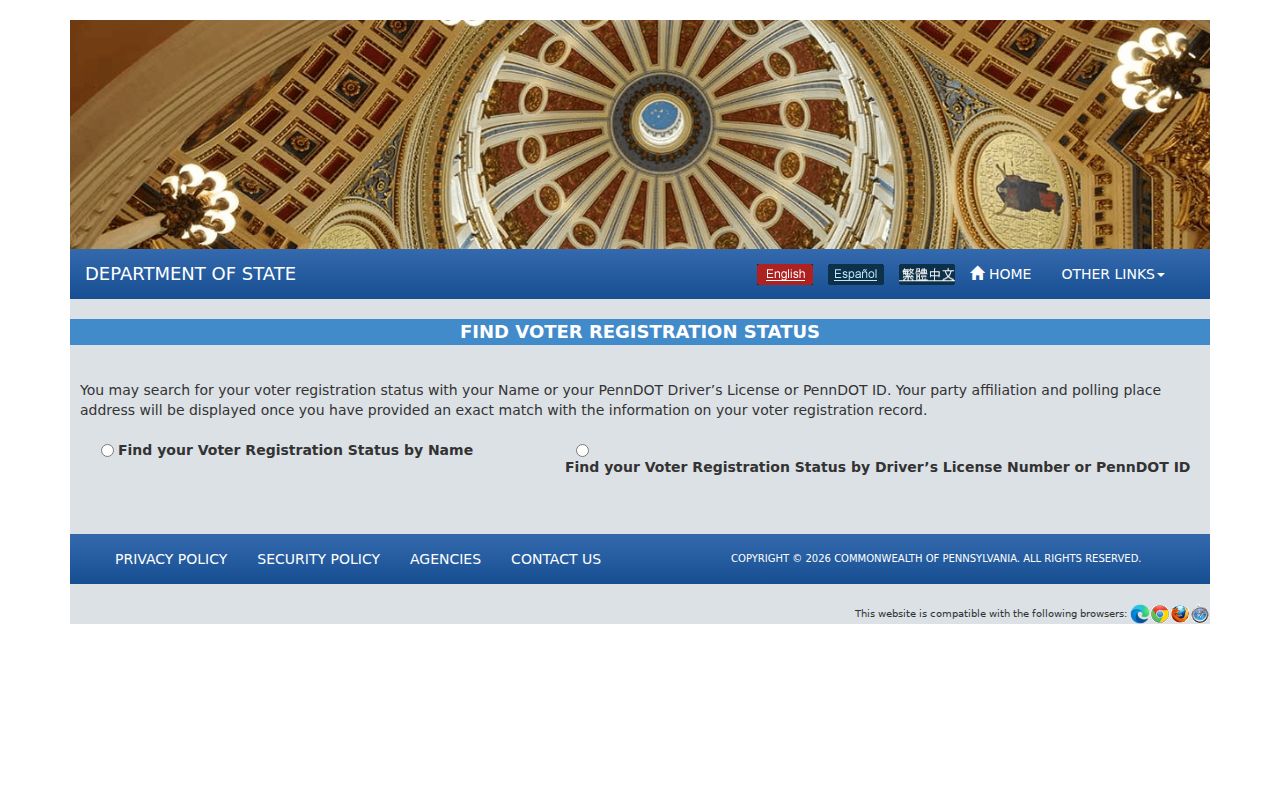
Personal registration status and a controlled county request are different access paths with different purposes.
Muhlenberg Township Estate Research Routes
The Berks Register of Wills genealogy route is particularly useful for family-history research. The office reports more than one million records in indexes developed over eight years by staff and volunteers. For 1992-present estate documents, the published process allows guest access after accepting terms, then searches by name, case number, or date. Earlier estate files require contact with the office.
An estate file can identify a decedent, fiduciary, heir context, dates, and a document trail. It does not make every related person a confirmed current resident. Compare a public estate result with a deed, vital-record era, or verified historic address. Berks marriage and local civil-register material can provide separate timing evidence, but recent certified vital records remain limited to eligible applicants.
Note: A family-history lead is strongest when its dates and place labels agree with a second custodial record.
Muhlenberg Township Postal History Checks
Historical research has a local geography problem. Muhlenberg Township formed from western Alsace in 1851, while Laureldale incorporated from Township land in 1930. Temple, Tuckerton, Rosedale, Hyde Park, and Riverview can all appear as community context. Township facilities use both Reading 19605 and Temple 19560 labels. A historical or postal label is therefore a lead, not final proof of present municipal jurisdiction.
Use a full address with the postal service when delivery geography matters, then use Berks Assessment or Mapping to confirm the municipality and UPI. That habit helps prevent a directory, census, or property result from being assigned to the wrong present-day place merely because it says Reading, Temple, Alsace, or Laureldale.
The Township's own historical chronology provides the local boundary context.
Local custodians work at the county level, so a precise municipality field helps them locate the correct record context.
Historical Muhlenberg Township Directories
The historical shelf is regional. Research did not identify a standalone annual Muhlenberg Township directory. The earliest confirmed local reference is the Reading Directory and City Register for 1856-57, cited by the Berks History Center. Penn State University Libraries also provides a digitized 1939 volume of Boyd's Reading City Directory, published by R. L. Polk & Co. Its catalog says surrounding-community coverage varies by year and includes places relevant to a Muhlenberg address search, such as Hyde Park and Laureldale.
Those facts establish a patchwork verified run, not uninterrupted coverage. A directory is a time-stamped published listing. Compare the volume's own place coverage and any abbreviation key with a deed, census date, or civil record before treating it as evidence of a household. The deeper collection and research methods are covered on the Muhlenberg Township city directory collections page.
Muhlenberg Township Library History Access
Muhlenberg Community Library lists Local History among its special collections and provides a household pass route to the Berks History Center. Its local material spans subjects such as Berks churches, railroads, bridges, Pennsylvania Dutch topics, and regional history. When a web portal has no older result, the local library is the sensible first question: ask for a title, year, catalog number, or the correct regional research stop rather than assuming a volume exists.
The Henry Janssen Library at the Berks History Center offers catalog, church-record, cemetery-index, Passing Scene Index, Historical Review, and library searches. Research-library access is by appointment Wednesday through Saturday, 9 to 3. Its archival collections can help explain a historical address or family record, but an index result still needs careful date and locality matching.
Muhlenberg Township RTKL Record Requests
For a Township administrative file that is not online, use the Muhlenberg Township Right-to-Know request form. The Pennsylvania Right-to-Know Law, 65 P.S. §§ 67.101-67.3104, is a way to request identifiable existing agency records. It does not require an office to create an answer or release protected material. A useful request names the record type, address or parcel if known, date range, and preferred delivery method.
The Township form distinguishes Township Records Officer Joel Capellupo from Police Records Officer Lorie Ferraro and allows email, mail, fax, or in-person delivery. It notes the ordinary five-business-day response period and a possible 30-day extension. Pennsylvania's Office of Open Records says an agency may charge according to the applicable fee schedule and seek prepayment for a high estimate. A narrow request has a better chance of locating an actual file than a broad question about a person or place.
The Township's online form shows the record-description and delivery choices needed for a focused request.
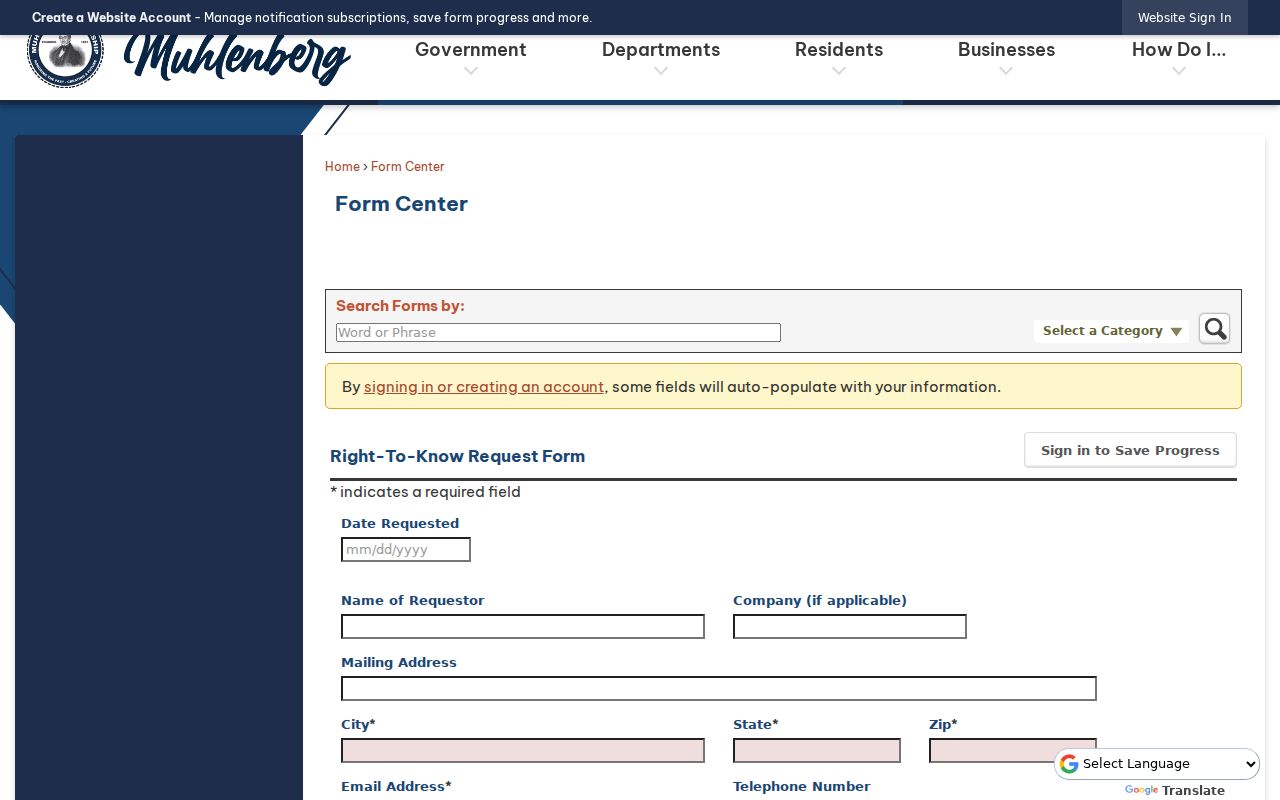
Use a request for a known record, such as a dated address file, and expect lawful exemptions or redactions where they apply.
Privacy Limits for Muhlenberg Township Searches
Pennsylvania's Address Confidentiality Program is an important exception to ordinary address assumptions. Eligible participants may use a substitute address for court, driver, vehicle, voter, school, marriage-license, utility, and other records. Its purpose is safety. A missing ordinary address can be deliberate protection, so an address search must never turn into an attempt to reconstruct or circumvent protected information.
Lawful personal research. Use public records for a legitimate personal, family-history, property, or civic question, never to stalk, harass, threaten, or intimidate another person.
Election lists have their own statutory use limits, vital records have confidentiality periods, and court availability can be restricted. If a record has an error, contact the office that maintains it and retain that office's response or reference number. The Office of Open Records explains the statewide RTKL process and its limits.
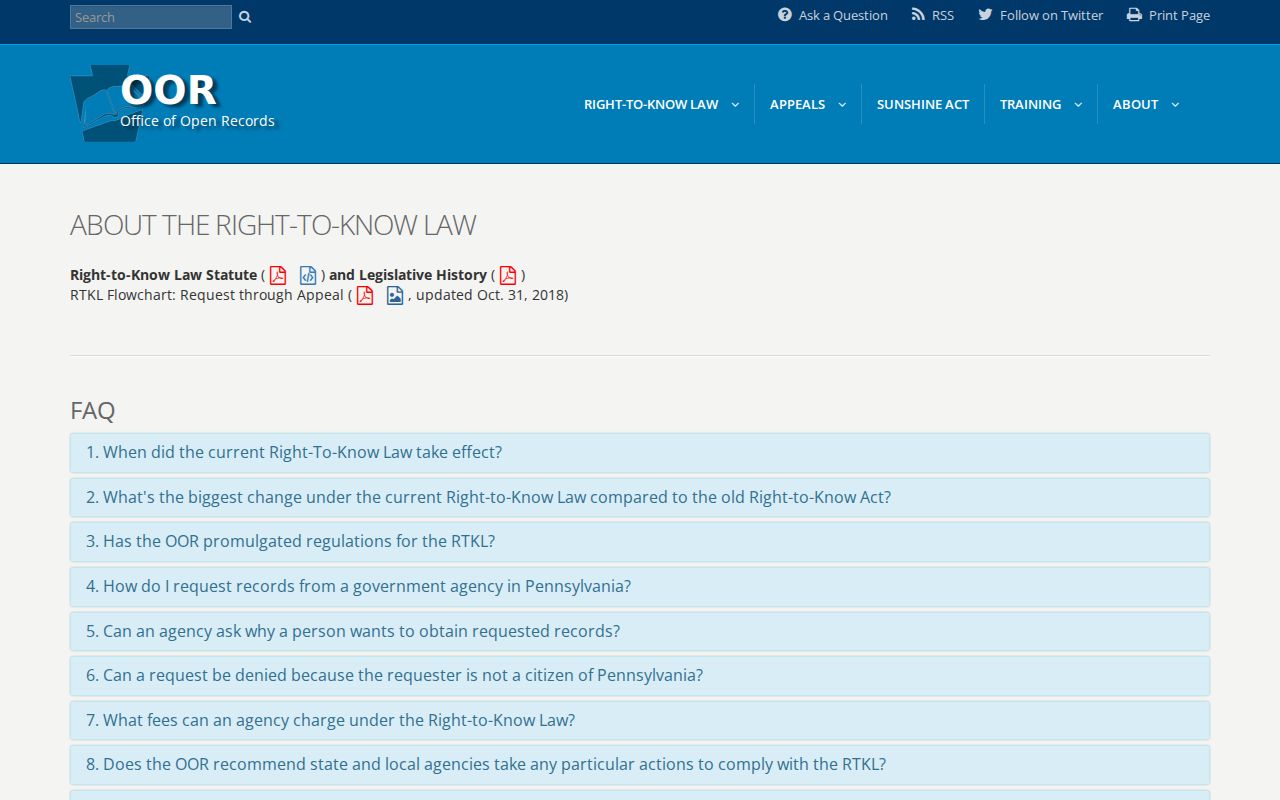
The statewide request framework supports access to eligible existing records while leaving confidentiality rules in place.