
Muhlenberg Township City Directory Collections
Historic directory research for Muhlenberg Township belongs on the Greater Reading and Berks County shelf. No authoritative source identified a separate, continuous Muhlenberg Township city directory series. The confirmed material is a patchwork of regional volumes and catalog routes. That distinction matters: a name missing from one book may reflect its coverage choices, not a move. Ask the holding institution to confirm the title, year, and index before relying on a volume for a township address.
| Collection | Years | Where Held | Access |
|---|---|---|---|
| Reading Directory and City Register | 1856-57 confirmed reference | Verify with Berks History Center or a library | Earliest confirmed regional directory lead |
| Boyd’s Reading (Berks County, Pa.), volume 77 | 1939 | Penn State University Libraries Digital Collections | Public digitized object in 40 parts |
| Greater Reading and Polk directory leads | 1955 and 1957-1959 leads | Library or History Center verification required | Do not treat leads as confirmed local holdings |
| Cross Reference Directory of Reading and Vicinity | July 1952 lead | Library or History Center verification required | Possible address tool only after confirmation |
The table deliberately does not promise annual coverage. A regional-history lead also names Reading volumes from several other years, but the research did not establish their present shelf access. Muhlenberg Community Library has local-history material, yet it does not publish a city-directory shelf list. Use its counter as a starting point, then confirm available years with staff or the regional research library.
Muhlenberg Township Directories Follow Greater Reading
Muhlenberg Township sits along Reading’s northern edge, so the practical printed-directory trail follows regional publishers and historical community names. The 1939 Boyd’s catalog says its surrounding-place coverage varies by year and specifically names Hyde Park and Laureldale among the communities included in that volume. It does not mean every Reading directory includes every current Muhlenberg Township community. Treat the title page and its coverage statement as part of the evidence.
Start historic searching with the locality that fits the date. Muhlenberg Township formed from Alsace in 1851, while Laureldale became a separate borough in 1930. A family can appear under Alsace before formation or Laureldale after separation without necessarily changing homes. The Township’s historical chronology gives the local boundary context behind those printed labels.
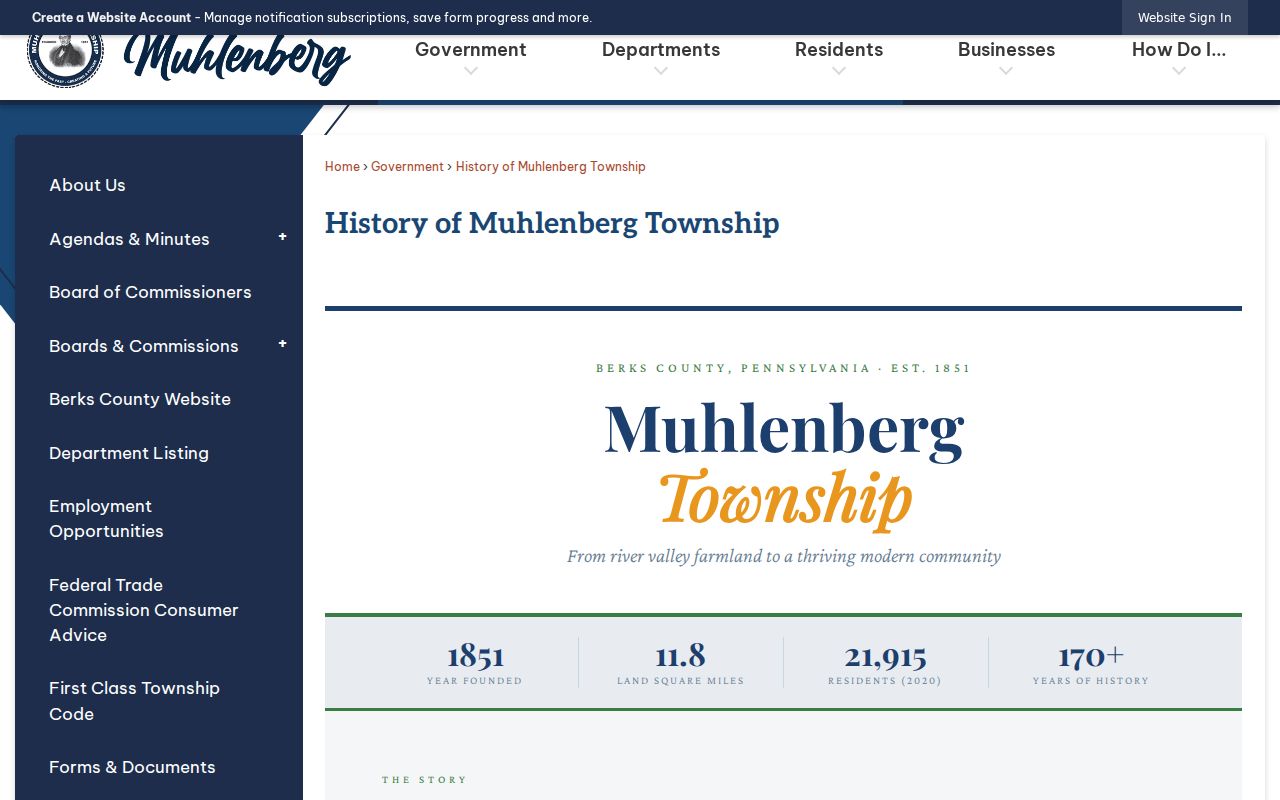
Use the chronology to test a place name before treating a directory listing as a present-day municipal match.
Muhlenberg Township Directory Evidence in Boyd’s 1939
The strongest online example is Penn State’s digitized 1939 Boyd’s Reading directory. It is volume 77, published by R. L. Polk & Co., and divided into 40 scanned parts. Its catalog describes a Reading directory with surrounding communities that vary by year. For a Muhlenberg Township search, Hyde Park and nearby Laureldale are the relevant named inclusions, but the user should still inspect the specific part and its headings.
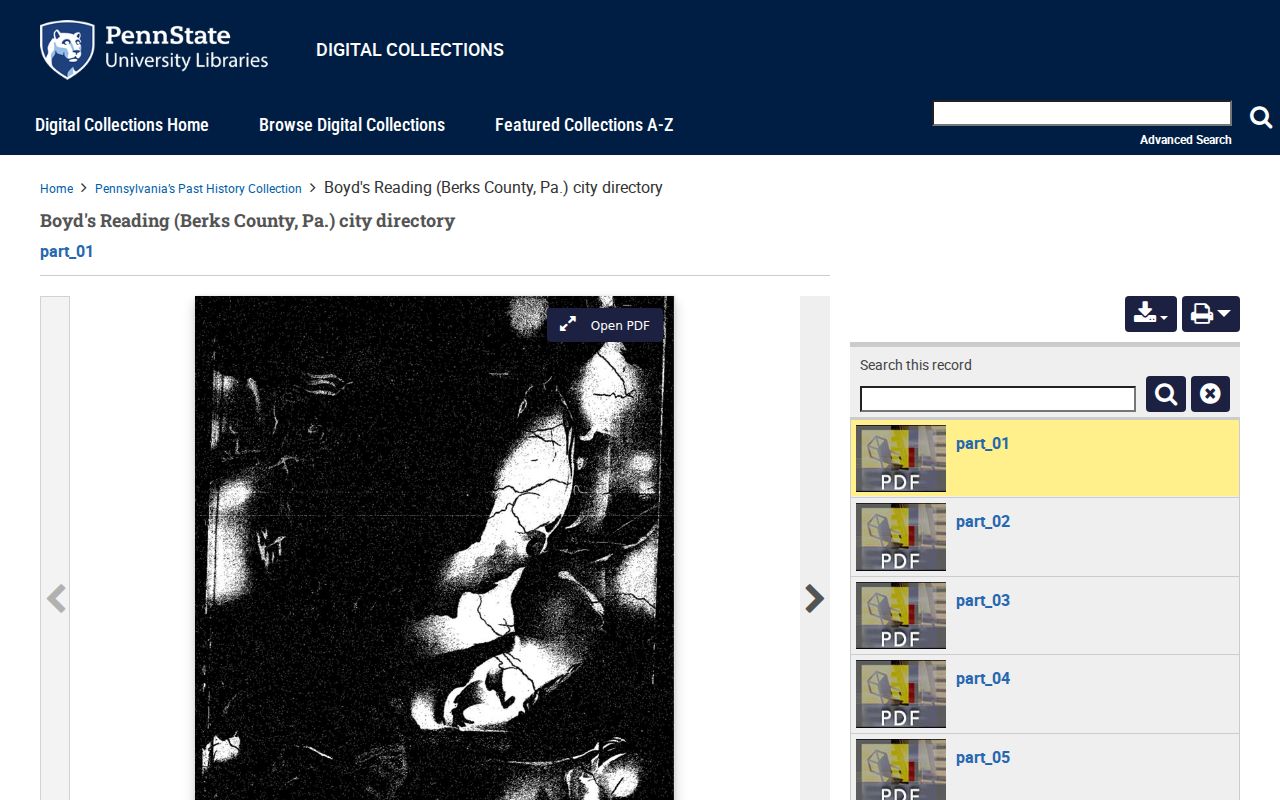
The digitized object proves the volume and its regional scope; it does not turn the series into a complete township roster.
Search the surname in more than one spelling when the printed index permits it. A business connection or a publisher’s inclusion practice can explain an entry, and a gap between volumes is normal. For a current parcel or street question, the historical books should remain a dated lead rather than replace the county’s address-keyed records.
Muhlenberg Township Historical Research Desks
Muhlenberg Community Library’s special collections list Local History and provide a household-pass route to the Berks History Center. The branch is at 3612 Kutztown Road in Laureldale and serves Muhlenberg Township, Laureldale, and Alsace Township. Because exact directory shelf years are not published, ask for a title and year, and ask separately whether a cross-reference or householder section is available.
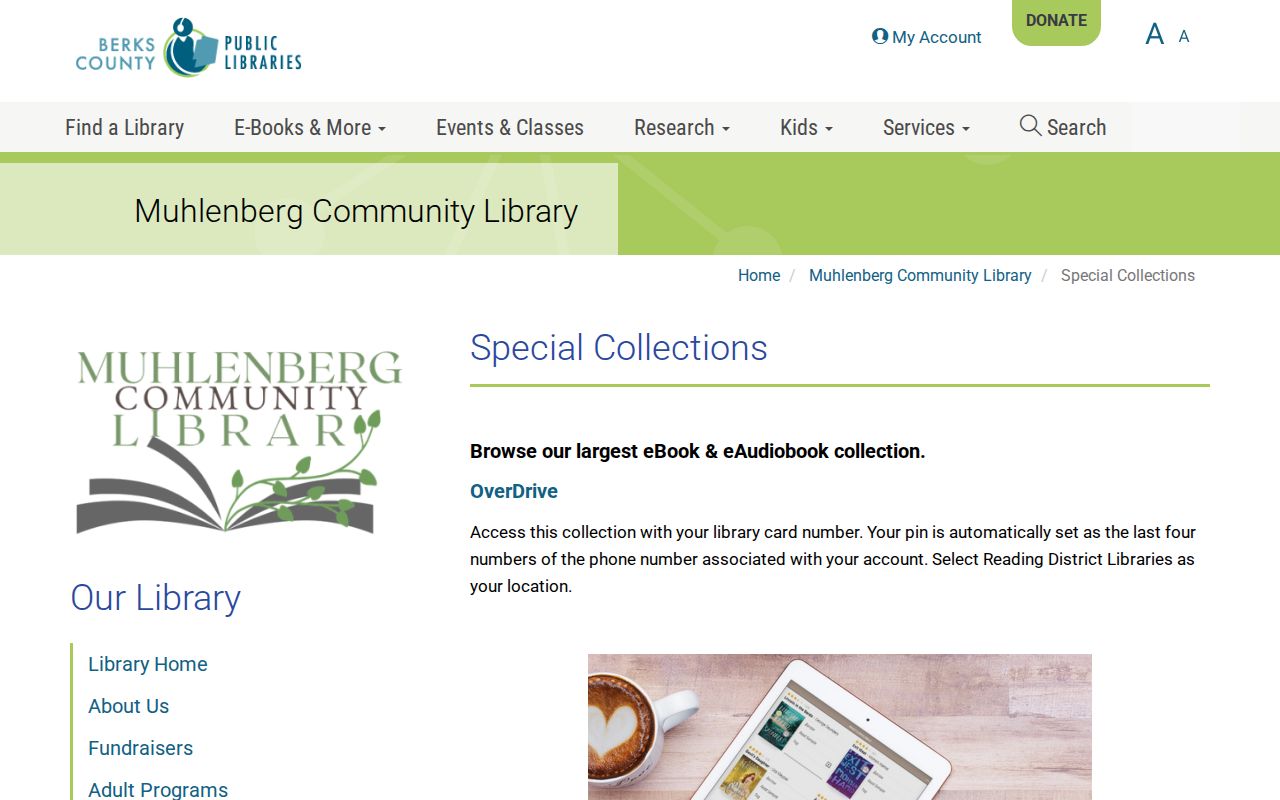
The local branch is the practical first stop for checking what can be requested or referred to the regional collection.
For the deeper regional route, the Berks History Center’s Henry Janssen Library offers a catalog plus separate church-record, cemetery-index, Passing Scene Index, Historical Review, and library searches. Research-library access is by appointment Wednesday through Saturday, 9 a.m. to 3 p.m. That combination makes it useful when an online directory year ends or when a surname needs corroboration from a local-history collection.
Reading a Muhlenberg Township Printed Entry
Read the actual page before translating a line into a family conclusion. The inspected Boyd’s catalog confirms the book’s title, publisher, date, regional coverage, and 40-part scan, but it did not expose a live person entry or an abbreviation legend. It would be inaccurate to promise a fixed set of spouse, work, ownership, or other marks for a Muhlenberg Township printed directory. Each volume’s own front matter and page layout control what can safely be read from it.
| Publication identity | Title, publisher, volume, and date establish which printed source is being used. |
|---|---|
| Place coverage | Read the title or introductory material to see which Reading-area communities the volume includes. |
| Person line | Transcribe the visible name and address information exactly as printed, including spelling and punctuation. |
| Section label | Note whether the page is alphabetical, street ordered, commercial, or another labeled index. |
| Legend or key | Read the volume’s own abbreviation key before expanding any notation. |
A photographed title page, the entry page, and the nearby legend make a repeatable research note. A historical listing is evidence that a publisher placed a name or address in that edition. It is not by itself proof of legal residence, a relationship, or uninterrupted presence.
- Criss-cross directory
- A directory section organized by street or address rather than by surname, if that particular volume includes one.
- Householder index
- An index labeled by the publisher to group a household or address. Confirm its stated scope before using it.
- Abbreviation key
- The publisher’s explanation of shortened terms or marks. Read it from the same volume, not from another directory.
Muhlenberg Township Directory Years Need Corroboration
Directory years should be paired with records that have their own dates. The best sequence is a directory year, a deed or sale reference, and the closest released federal census. The latest released census is 1950. That comparison helps separate a temporary listing, a spelling shift, and a true move without inventing continuity between patchwork books.
| Date or period | Record context | How it helps a directory search |
|---|---|---|
| 1851 | Muhlenberg Township formed from Alsace | Test whether older material uses Alsace rather than the later township name. |
| 1856-57 | Confirmed Reading Directory and City Register reference | Use as an early regional starting point after holding verification. |
| 1930 | Laureldale separated from township land | Check municipal labels before inferring a household move. |
| 1939 | Digitized Boyd’s Reading volume 77 | Inspect its stated surrounding-community coverage and scanned pages. |
| 1950 | Latest released federal census | Provides a dated household comparison near an available directory edition. |
Pennsylvania State Archives historical birth-record guidance also helps place a family event in the right archival era. Berks local civil registers and statewide records overlap in some periods, so the record year determines the right custodian.
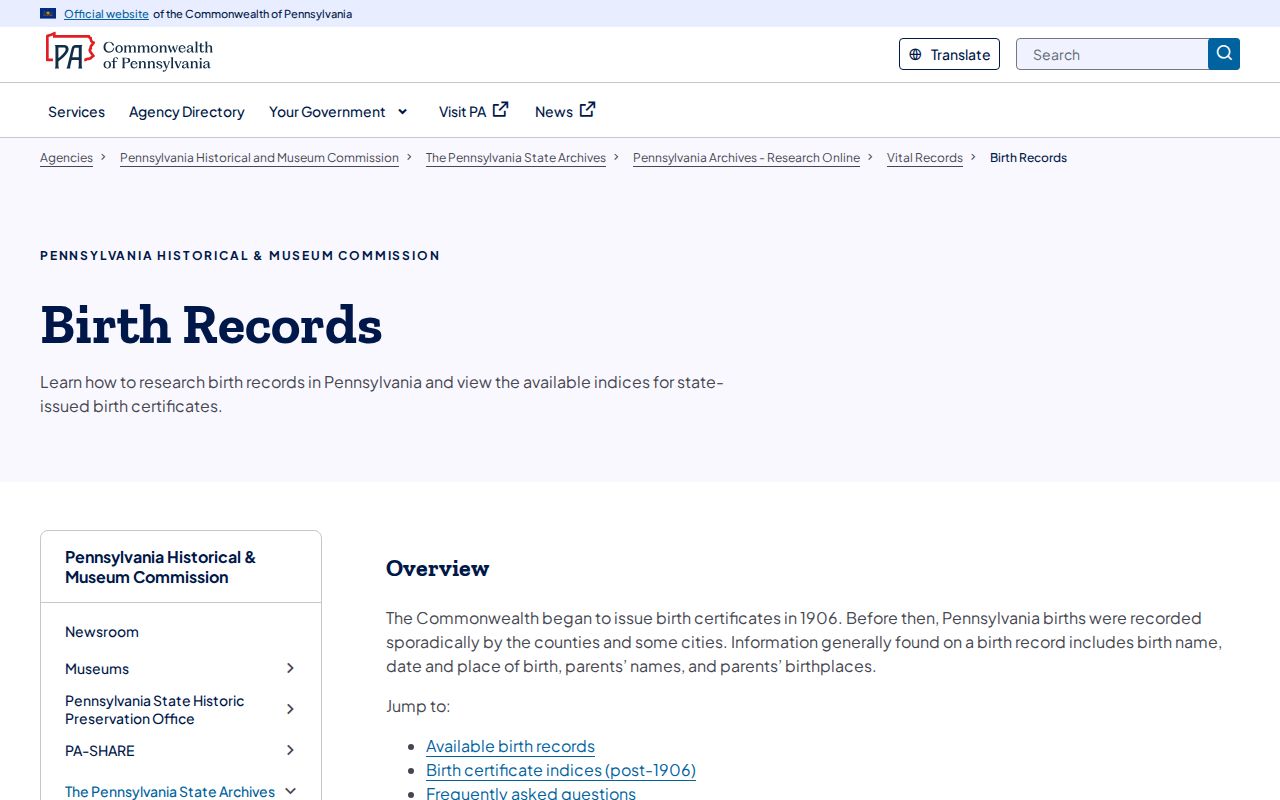
Use a vital-record date to test a directory lead, not to assume that every nearby year has a matching public record.
Trace a Muhlenberg Township Family Line
A reliable family-history trail begins with the most exact place information available. An older parcel record, deed, or legal description can supply the municipality and address form to test in a regional directory. Record each spelling exactly, including a name that changes between editions. Then compare only independently sourced facts, such as a deed date, a census household, a marriage index, an estate file, or an archival death record.
- Identify the date, surname spelling, and historical locality from a document or known family record.
- Pull the nearest confirmed Greater Reading directory year and inspect its title, coverage statement, and index labels.
- Transcribe the visible entry and its page reference without adding unstated meanings to abbreviations.
- Compare the address or locality with the closest released census and the deed or sale timeframe.
- Check Berks marriage, estate, cemetery, or historical civil material when an event can explain a change.
- Resolve conflicts by returning to the original public record rather than treating a directory gap as an answer.
The Berks Register of Wills genealogy route and the History Center are useful follow-ups when the trail is family history rather than a current-address question. Charles Evans Cemetery records, available through an established genealogy collection for 1887-1979, are regional evidence only. A person’s absence from that collection or from a printed volume does not settle where they lived or were buried.
Muhlenberg Township Historical Directory Boundaries
Use historical directories for personal, lawful family-history research and civic curiosity, not to pursue people. The region’s shifting labels are a research advantage when handled carefully, but they are also a reason to avoid certainty from one printed line. A historic address may require the township history, a parcel UPI, a deed legal description, and a dated directory entry to line up before it is reasonably identified.
When the question becomes a current address chain rather than a historical shelf question, use the county’s address workflow on the Muhlenberg Township street directory. When a printed name needs a separate modern-record confirmation, the resident lookup route uses different custodians and boundaries.