
Muhlenberg Township Previous Resident Eras
One address needs different sources for different periods. Start with the current Berks assessment record because it supplies the UPI and sale or deed reference. The Recorder then carries the title work backward. Published directories and census schedules are a separate household layer, used only for the particular years that are actually confirmed. Township transfer files can date a current process, but no continuous local occupancy index was located. The table keeps those layers separate so a record is not made to prove more than it can.
| Source | Years it covers | Where held | What it shows |
|---|---|---|---|
| Berks assessment record | Current live roll; tax year appears on card | Property Records Search | UPI, site location, assessment owner, mailing field, sales and deed lead |
| Recorder index and images | County reports 1752 to present; Index Books advised before 1926 | Cloud Search, Index Books, Recorder | Title parties, legal description, plans, and linked recordings |
| Original record books | 1752-1953 | Berks Recorder | Handwritten and typed record layer |
| Recorder microfilm | 1953-2004 | Berks Recorder | Preservation layer for recorded documents |
| Reading regional directories | 1856-57 and 1939 confirmed; other years need verification | Penn State and local-history institutions | Published regional address or household lead |
| Federal census | Through 1950 at the research date | National Archives and genealogy institutions | Date-specific household snapshot |
| Township transfer file | Current program; record years not published | Township Codes or RTKL | Transfer or inspection timing, not continuous occupancy |
A past-residents search becomes more reliable when each source is kept in its own time frame. A deed can show title parties. A directory or census can offer a historical household clue. Neither should be expanded into a claim about every person ever connected with the address.
Start With Muhlenberg Township Address UPI
Use the public Berks Property Records Search to find the present parcel by address, owner name, or UPI. Save the Site Location, Municipality, exact UPI, sale date, validity code, instrument number, and deed book or page. Confirm that the municipality is Muhlenberg Township. A Reading or Temple postal label may occur within township service geography, so it is not enough by itself.
Site Location and Mailing Address are separate assessment fields. The first identifies the physical parcel. The second is a correspondence field and may be elsewhere. The owner block identifies an assessment owner, not a complete household. A useful prior-resident trail starts with those distinctions intact, then moves to the recorded conveyance rather than treating a present card as a history of everyone who lived there.
Trace Muhlenberg Township Past Resident Deeds
The recorded deed chain is the main route to past owners. Take the latest sales or deed reference from the assessment card to the Recorder, then copy the exact party names, recording date, document number or book and page, legal description, and plan reference. Search the former owner in the reciprocal role and follow the earlier reference. A title chain can include mortgages, releases, easements, plans, tax-claim deeds, sheriff deeds, and court records that explain a gap. It is a property trail, not by itself a continuous household record.
- Locate the current parcel card and preserve its UPI, municipality, sales entry, and recorded-deed reference.
- Find that conveyance in Recorder Cloud Search and identify its grantee, grantor, date, and legal description.
- Search the former owner as grantee or use the linked prior book, page, or instrument reference to find the earlier acquisition.
- Repeat the reciprocal search, copying spelling variants and plan or lot references as the street wording changes.
- Move to Index Books or Recorder assistance for difficult older names, then compare title dates with confirmed directory and census years.
- Grantor
- The party transferring a property interest in the recorded instrument.
- Grantee
- The party receiving the property interest in that instrument.
- Chain of title
- The sequence of recorded ownership interests connected through deeds and related documents.
- Legal description
- The deed’s property description, often using lot, plan, or measurement language instead of the current street address.
Berks Recorder Cloud Search is the public work area for current land-record searching and copy orders.
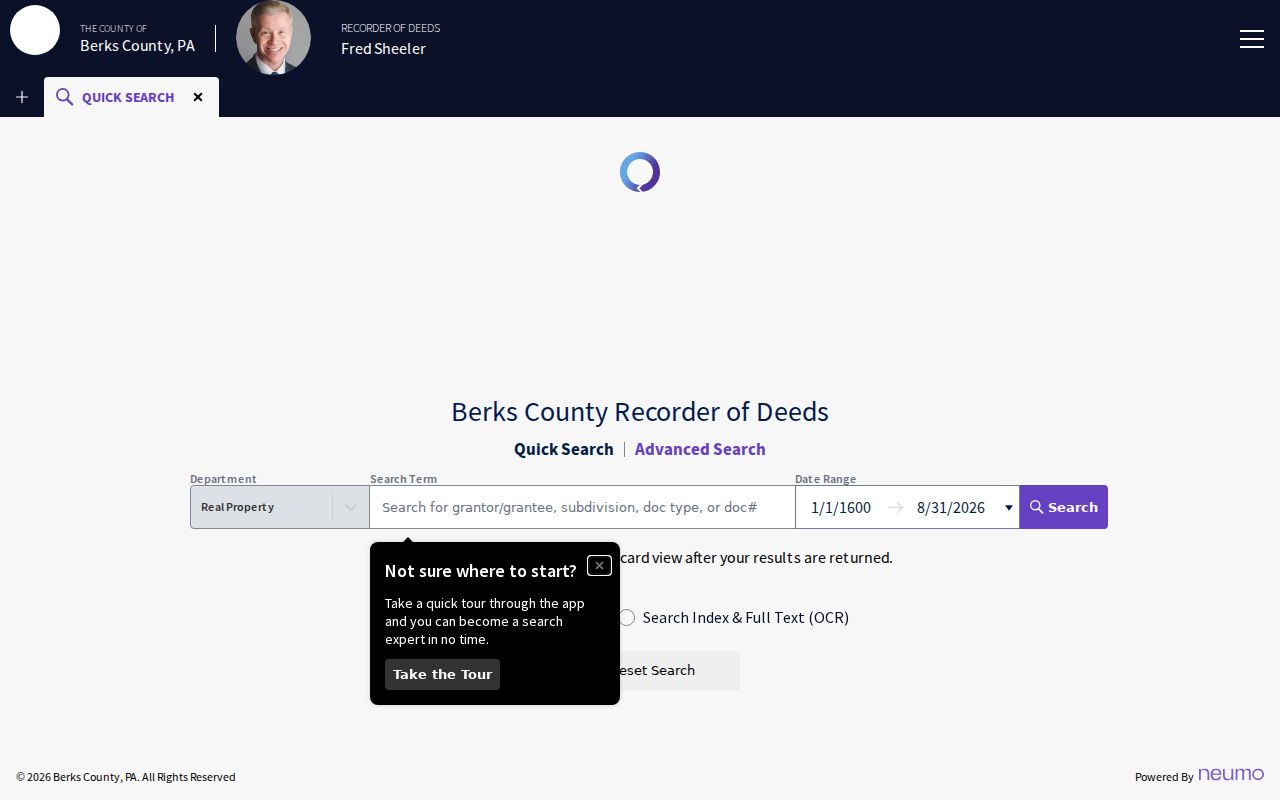
The search workspace supports the deed portion of the trail, but a result must still be read for party role, property description, and date before it is added to a house history.
Muhlenberg Township Past Resident Index Quirk
Berks says its recorded-document index and images reach back to 1752, yet it separately directs researchers to Index Books for older searching and specifically recommends them for pre-1926 deeds and mortgages. Enter a party’s last name and first initial, or enter an organization in the last-name field with the initial field empty. Earlier names are grouped by similar sound, a useful feature when a spelling varies from one deed to the next.
Use the books with the Recorder’s retention layers in mind. Original handwritten or typed record books span 1752 through 1953. Microfilm forms the 1953 through 2004 preservation layer, and records from 2004 onward are digitally retained with microfilm backup. The system is deep, but no single current name search should be called a finished abstract of title.
Muhlenberg Township Past Resident Directories
Regional geography matters more than a claimed standalone township directory. The confirmed starting points are the Reading Directory and City Register for 1856-57 and Penn State University Libraries’ digitized 1939 Boyd’s Reading directory, volume 77. The 1939 catalog says the series’ surrounding-community coverage varies by year and includes communities such as Hyde Park and Laureldale. That makes it a useful address lead only after the relevant volume and locality have been checked.
Do not claim a continuous annual run. The Muhlenberg Community Library’s exact shelf years and any reverse-directory holdings were not published in the research. The Berks History Center and Henry Janssen Library provide catalog, church-record, cemetery-index, Passing Scene Index, and library searches by appointment. The historical collections are described in more depth with the Muhlenberg Township city directories, while an address history uses a confirmed issue as one dated layer.
Penn State’s 1939 Boyd’s directory object supplies the verified digitized regional volume. The catalog describes 40 scanned parts, not a guarantee that every present-day township address appears.
Pair Census With Muhlenberg Township Directories
Federal census schedules add a household snapshot for a fixed date, and the latest released federal census was 1950 at the time of the research. Pair it with the nearest confirmed directory year, then compare both with deed dates and life-record evidence. A matching address or locality is a lead to test, not proof that the same people remained there between publications. Spelling, boundary labels, and the form of an address can change.
- Place the parcel on a deed timeline using the UPI, legal description, sale reference, and recorded title chain.
- Select the closest confirmed regional directory, not an assumed annual volume, and note its stated geographic scope.
- Compare the directory lead with the nearest census date and the historical locality label.
- Test a conflict against estate, marriage, death, cemetery, or Recorder material held by the responsible custodian.
Berks marriage records can add a dated family-history fact when the actual record and legal access rules support it. County marriage material is listed from 1885 forward, with City of Reading records for 1876 through 1884. The current Berks marriage-license portal is an application route, not a historical people search.
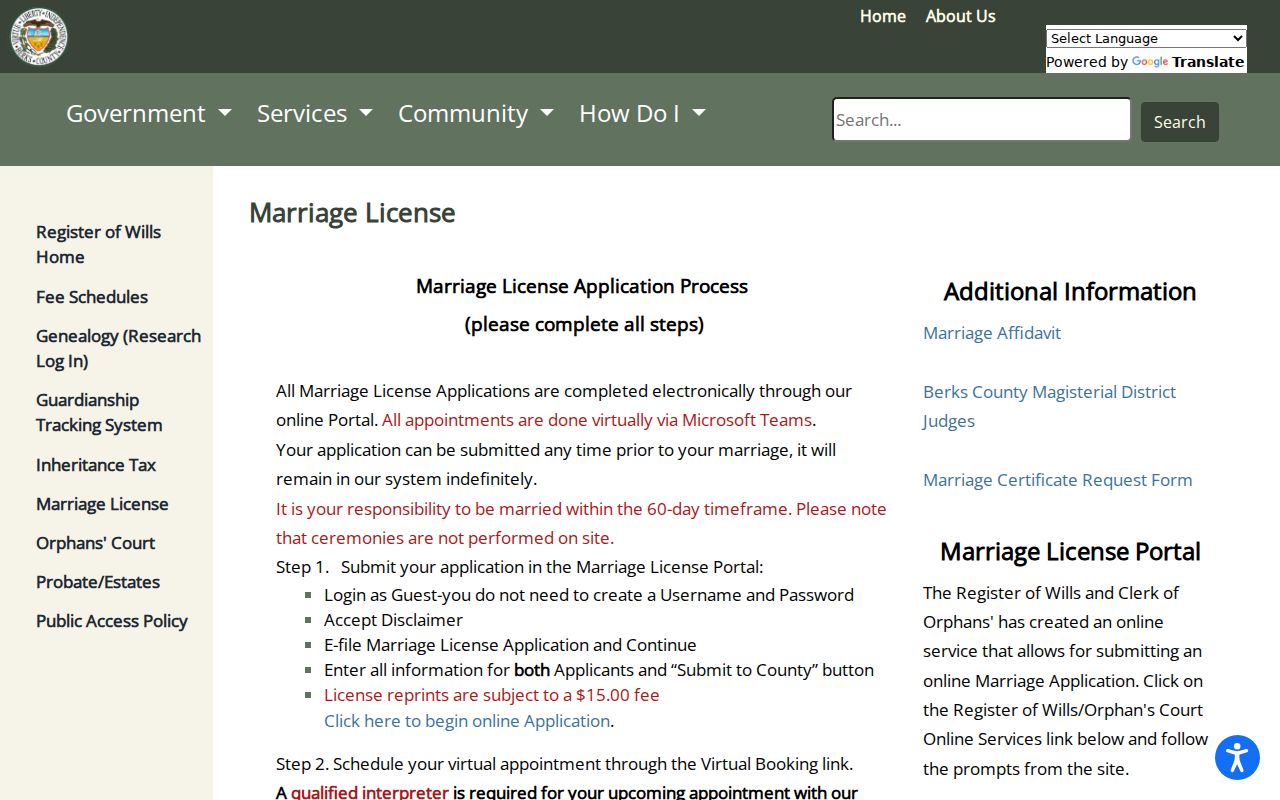
The current portal’s virtual appointment process and its $65 payment requirement belong to a present application, while historical copy work follows the Register’s record and fee procedures.
Muhlenberg Township Past Resident Label Tip
Address continuity can fail because the label changed, not because the property did. Muhlenberg formed from western Alsace in 1851, and Laureldale incorporated from former township land in 1930. Historic records can also use Reading, Temple, Hyde Park, Tuckerton, Rosedale, or Riverview. Before declaring a record unrelated, compare its legal description, lot or plan reference, municipality, and period.
No authoritative source located a township-wide renumbering or street-renaming project with a date. Sanborn coverage and a regional reverse directory also lack verified Muhlenberg years in the researched sources. Ask the Muhlenberg Community Library or Berks History Center for the actual holding and year before relying on either. This is a research gap, not evidence that a particular volume or map does not exist.
Note: A historic postal or community label needs parcel and boundary context before it can be treated as the same Muhlenberg Township address.
Muhlenberg Township Past Record Limits
Several official public portals may surface a name, but they are not past-resident tools. Use each only for its stated function and never turn a name match into an address conclusion. Pennsylvania Licensing System, or PALS, is a state-board public license-verification gateway. It can help confirm the published status of a credential with the responsible board. It does not establish a person’s former home or a property connection.
The official PALS portal is shown below as a narrow verification source.
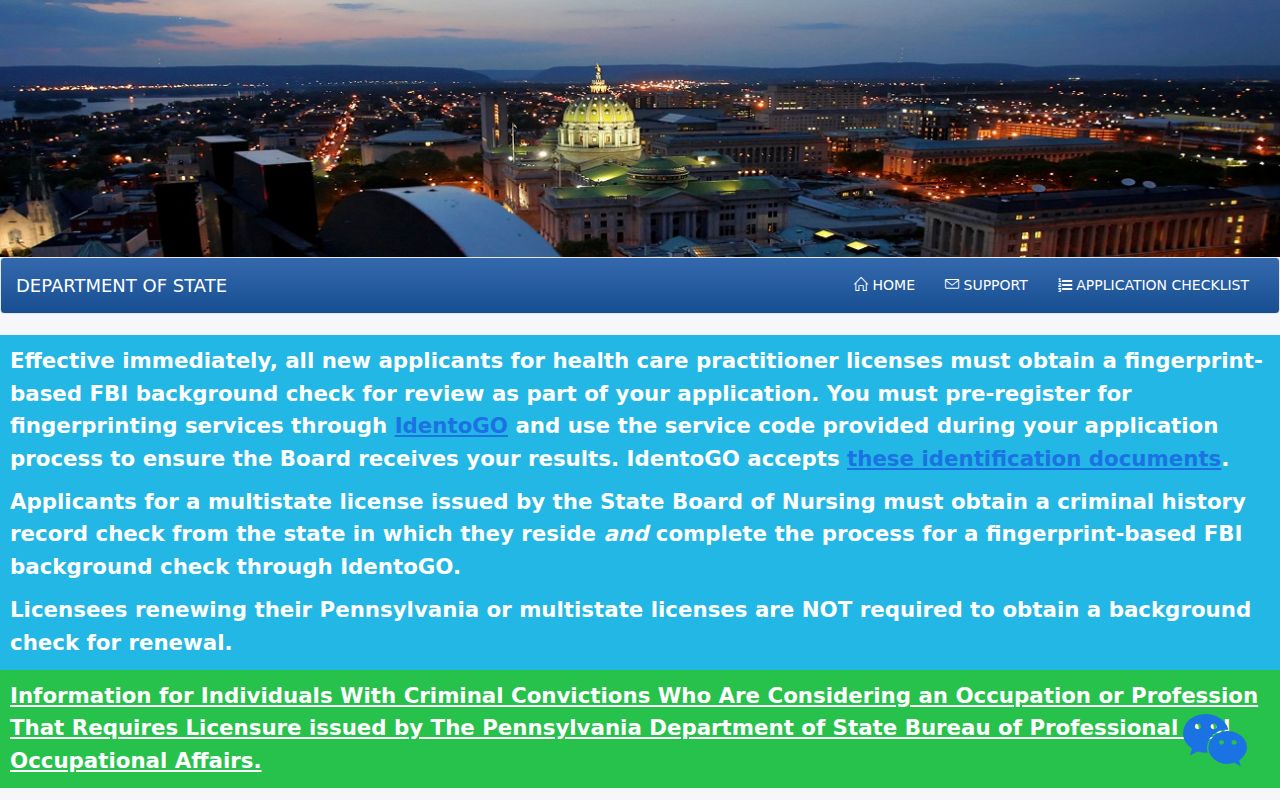
A matching license entry still requires credential and board confirmation, and it does not replace the parcel, deed, directory, or census trail.
The Berks County Jail System links an Inmate Locator and warns about callers posing as jail staff to seek money. Its locator concerns custody status, not a prior address.
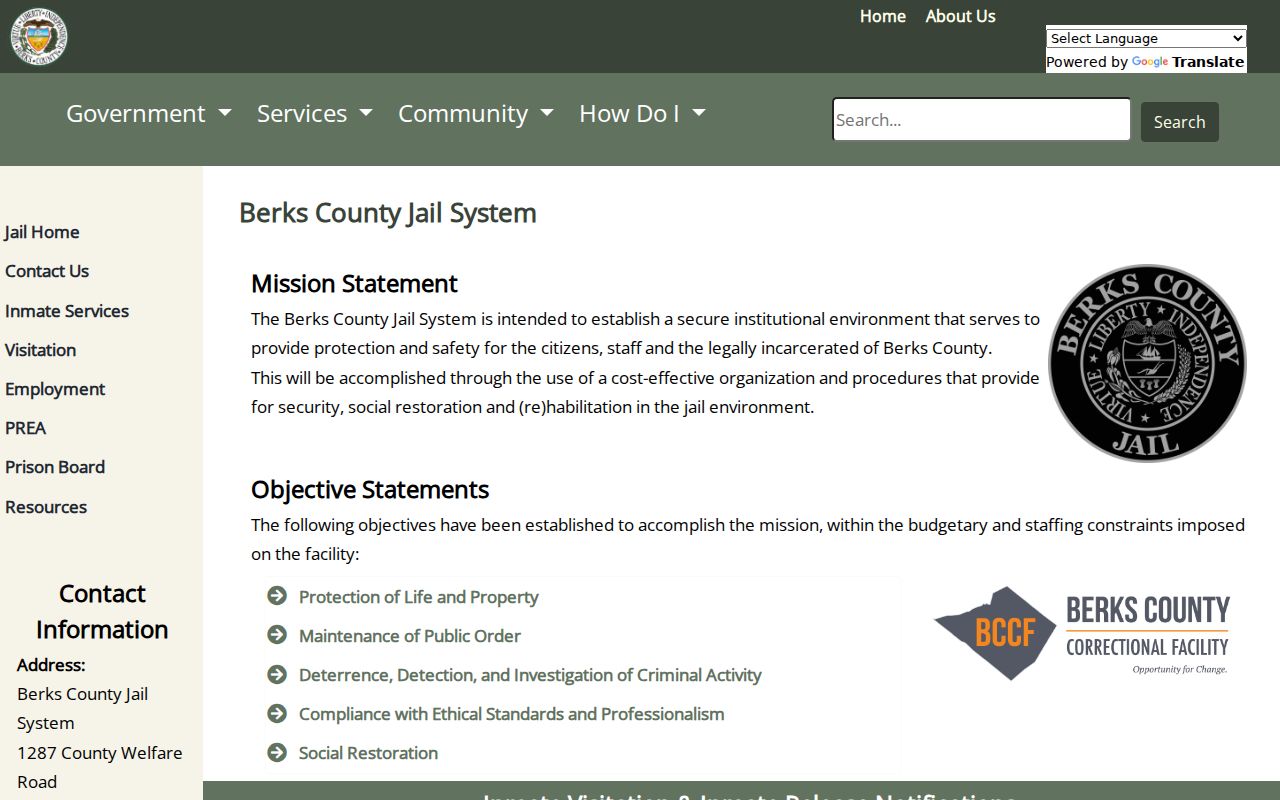
The County says suspected jail-payment impersonation should be checked with the District Attorney Detective Division, not answered through a caller.
The Pennsylvania DOC Locator covers people under department jurisdiction or supervision and updates daily. It excludes people in county facilities and people incarcerated in other states.
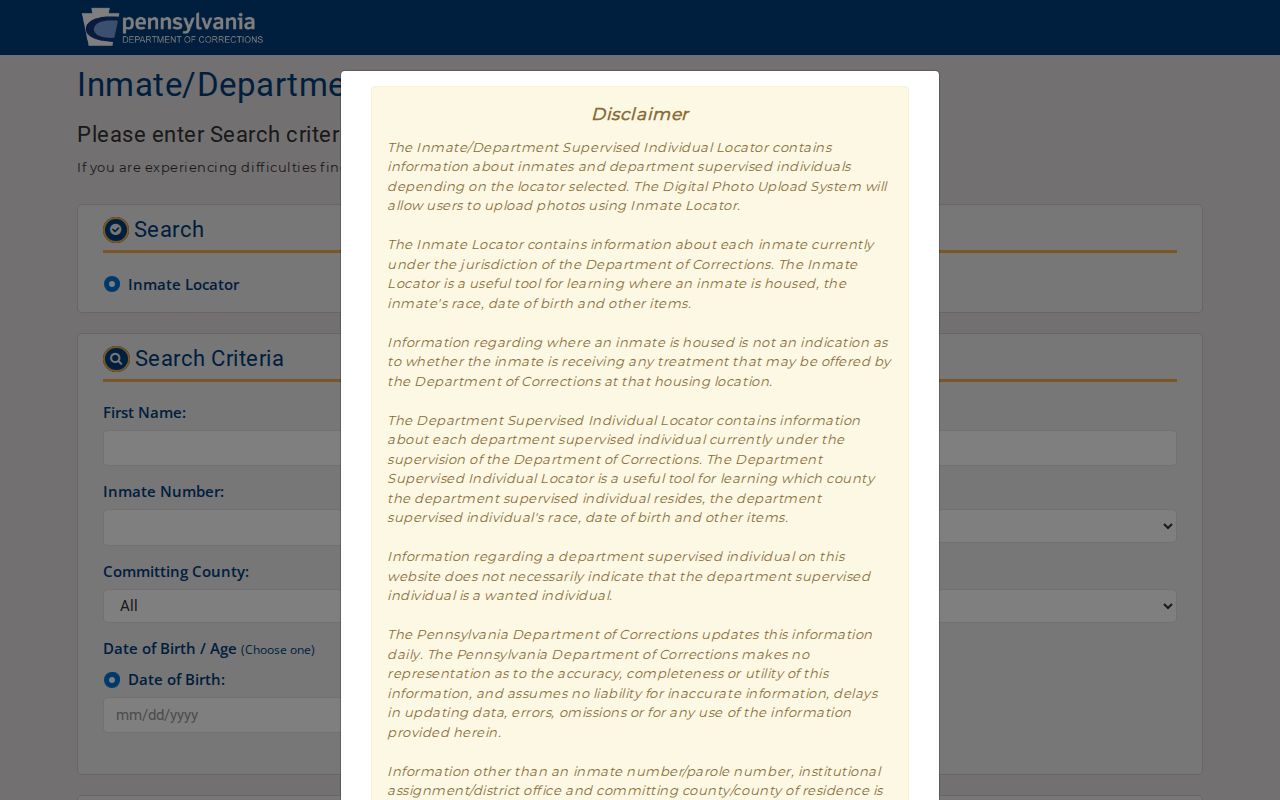
A custody or supervision entry cannot be used as proof that a person lived at a Muhlenberg Township address.
PA Treasury’s unclaimed-property search begins with a last name, company name, or property number and offers optional ZIP, address, and city fields. It requires claimant verification and CAPTCHA.
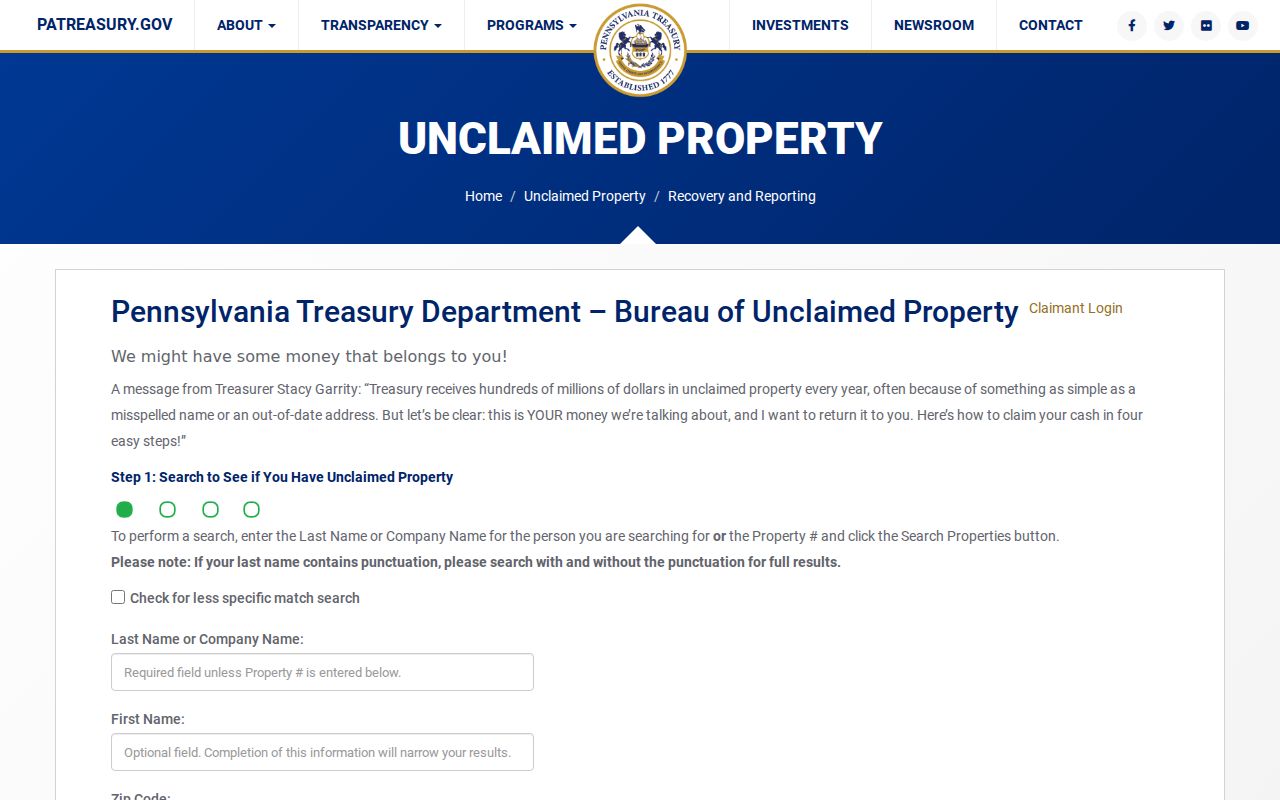
An unclaimed-property match is only a name-and-address clue that must be verified by the claimant process. It is not evidence of a current or former household.
Lawful Muhlenberg Township Past Resident Research
Current property cards and recorded deeds do not prove all former household residents. A recorded party may be an owner, fiduciary, lender, or other participant rather than an occupant. Directories are time-stamped published listings with their own coverage limits. Census schedules are also fixed-date snapshots. Treat the source type and date as part of every conclusion, especially where a home may have been divided, combined, renamed, or described by a plan rather than its present street number.
Pennsylvania’s Address Confidentiality Program allows eligible participants to use a substitute address across several public systems. Do not try to defeat that protection by combining parcel, election, court, or other records. Public records are for lawful personal research, property history, estate and family-history questions, and civic understanding. Pennsylvania harassment and stalking provisions, 18 Pa.C.S. §§ 2709 and 2709.1, apply when information is used to intimidate, threaten, surveil, or target someone.
Lawful use. Use Muhlenberg Township address history for family, estate, property, or personal research, and never use it to stalk, harass, intimidate, or harm anyone.